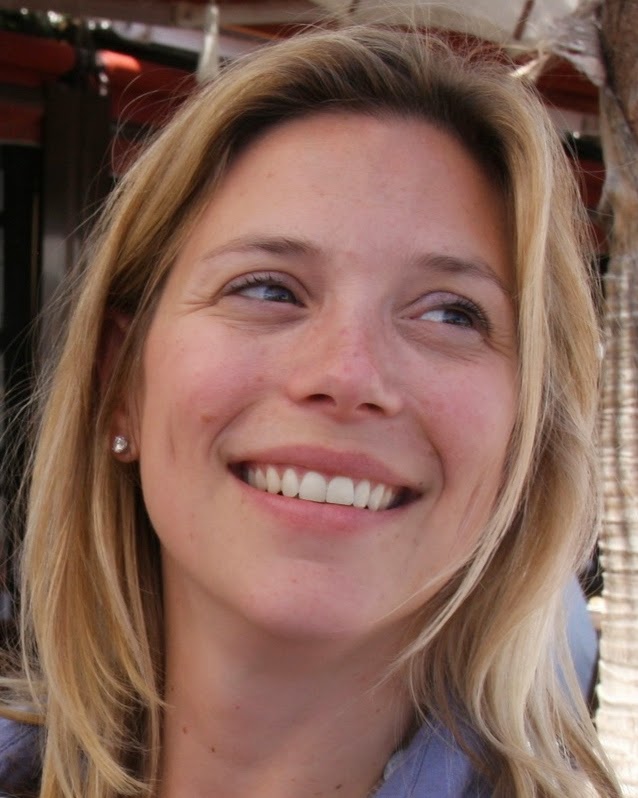
Today we're delighted to welcome Dea Brovig, author of The Last Boat Home, to the blog. For those you haven't read it, the novel tells the story of single mother Else, and is set in a small Norwegian coastal town, in the present day with flashbacks to the 1970s. 'Else' is not a lot older than I am, so I was growing up at a similar sort of time but in a very different world; I was so intrigued, I wanted to know more.....
Else's hometown is deeply
religious, with a slightly puritanical lifestyle in which something as
innocuous as a cinema trip is considered frivolous. Is it typical for the time
and place?
Norway
has a history of strict pietism, especially on the western and southern coasts.
It’s a side to the country that I find fascinating, not least because of its
reputation for liberalism. My mother-in-law tells a story from when she was
growing up of being pelted with stones by the neighbour children because they’d
seen her mother wearing lipstick – something that no “good Christian” would do.
My father remembers the fire-and-brimstone sermons he sat through as a boy, and
stumbling upon a prayer meeting in which the participants were talking in
tongues.
Over
time that brand of Lutheranism has tempered itself, but in the mid-1970s, when
we first meet Else in The Last Boat Home,
there were still people in religious milieus who didn’t go to the cinema, who
abstained from alcohol and listening to rock ‘n’ roll, who considered it sinful
to play cards or football on a Sunday. Nowadays, the Norwegian State Church
preaches benevolence, but there remain pockets of the population whose Christian beliefs demand a more ascetic lifestyle.
Being a teenage mother isn't an
easy thing even today, but Else's community seemed more likely to ostracise her
for sinning, than rally round and help....
This
is close-knit community where everyone knows each other’s business, and the rumours
surrounding Else’s pregnancy are scandalising. Her situation isn’t helped by the
pastor’s warnings about God’s judgment, which only serve to legitimise his
parishioners’ treatment of her. But Else does have friends who stand by her and
who help her to make a life for herself. More than that, she has the support of
her mother, who defends her to the last.
From the pictures I found on your
publishers website, the area looks very beautiful - but all those photos were
taken in summer. I assume it's very different in winter...
It
is! The winter landscapes can be beautiful, too, especially if you’re lucky
enough to be out in nature, but the weather has its challenges, like having to
start each morning by scraping the ice from your windscreen, or having to peel
off layer upon layer (snowsuit, trousers, long johns) when your child suddenly announces
they need the loo. Sometimes it’s bitterly cold, but the darkness is worse. In
the south of the country, you can expect a few hours of dim sunlight every day
and a season that drags on from November until April or even May. On the other
hand, the conditions are ideal for fireside reading, and if you like
cross-country skiing, there’s nowhere better to be.

By the end of the 'flashbacks' to
the 1970s, there's a feeling of change coming with the discovery of North Sea
Oil. I assume it must have altered life in the coastal towns considerably, with
an influx of jobs, money and incomers?
The
first of Norway’s oil fields was discovered in the North Sea in 1969, but it
took a few years before the country began to feel the benefits. Then, in a
relatively short period of time, Norway was transformed from one of Europe’s
poorest countries to one of its wealthiest. The two storylines in The Last Boat Home bracket this time of
change. Else lives in the same, small town as a 16 year old in 1974 as she does
in 2009, but it is almost unrecognisable. In 1974, its inhabitants are
suspicious of a troupe of foreign circus performers; in 2009, the town is
multicultural. Where before most people eked out a living on land and sea, now
the coast is cluttered with second homes and the fjords are busy with leisure
boat traffic.
And finally the question every
author is asked, do you have plans for your next novel? You've moved around a
lot, living in nine countries, will you be drawing on any of them for future
inspiration?
I
imagine I will, at some point, but for now I’ll continue to look to Norway. It’s
a place that’s very special to me, and even though I’ve been abroad for much of
my adult life, in many ways it still feels like home. Belonging to somewhere
but being separate from it gives you an unusual perspective. There’s
also something about the landscape that lends itself to storytelling, I think. The
country’s size and ruggedness mean there are clusters of people who live
intimately, but far from everyone else. There’s an interesting mix of
claustrophobia and isolation, which is a great starting point for a novel.
I’m
currently researching a book set in the north of the country – but it’s still
early days, so I don’t want to say more than that!
Thank you for dropping by, Dea, and best of luck with your future novels.

