Pages

Showing posts with label apocalypse. Show all posts

Thursday, 24 February 2022

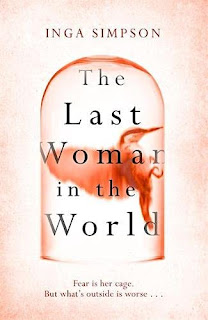
The Last Woman in the World by Inge Simpson


 Rachel lives an almost hermit-like life far from others deep in the Australian bush. So when a young woman arrives asking for help for her sick baby, Rachel is at first tempted to turn them away. But listening to the woman, Hannah, she begins to realise that the civilisation she's fled from has started to crumble under a pandemic, and that Rachel herself may be the only person left who can help.

At first they head for the nearest town ('nearest' being a bit of a relative term as the story is set in the Australian outback) to find Rachel's sister who's the doctor there. Then, finding she's already left, they follow her presumed trail to Canberra. It's road trip with a difference as besides the natural difficulties they have to face survivors as desperate as themselves, and a new plague of 'demons' or 'spirits' which kill through fear.  

There's a lot here that readers of apocalyptic fiction will find familiar - a person living safely outside of society during a time of upheaval is forced to take a journey out of their secure bubble, to confront the chaos and dangers of the outside world. And if Rachel thought the outside was dangerous before, it's now doubly, triply, so, with bush fires, survivor groups and the demons to be evaded, plus she has Hannah and the baby to look after. 

It's a gripping enough read but too similar to other apocalyptic stories to really stand out from the crowd. Its main difference comes in that, for once, the world is going to be saved by women rather than men. 

Friday, 25 September 2020

The End of Men by Christina Sweeney-Baird

A patient arrives in  hospital with flu-like symptoms and within hours he's dead. His illness is like nothing anyone has seen before, and before anyone has chance to act the infection is sweeping through the hospital and beyond. The most bizarre thing is that only men seem to be affected. What do you do when the world's faced with losing almost half its population, and its accumulated skills and knowledge?

This isn't published till next spring, and I'm not sure whether its relevance to this past year will work for or against it. How many want to read more about pandemics? Will we have had quite enough of them by then?I'm not sure. I've happily watched Contagion (and criticised it) during lockdown, and raced through this. Maybe it's akin to watching disaster movies or real-life medical dramas? Whatever, it's a compelling read - particularity the first half/three quarters, it slows after that - and I rather enjoyed it even when picking fault with the characters' actions.

Unfortunately we're all now experts on pandemics, so a variety of things may grate - no lockdown, no mention of R number, no segregation of men and women. And as a voracious reader and watcher of apocalyptic pandemic fiction I like to spot details that I think might not hold true, and plan how I would do things differently and, of course, better (down the Winchester for a pint), so I did somewhat pick holes in the plot as I went along. As I said, though, I still enjoyed it. It's gripping, quickly paced, and highly topical!

It would make a brilliant read for a book club, or just to discuss among like-minded, slightly survivalist friends. I'd love to hear a man's opinion of it - though he'd probably insist he'd fall into the tiny immune group.


Thursday, 4 July 2019

Emily Eternal by M G Wheaton


Emily is an artificial consciousness, designed in a lab to help humans process trauma, which is particularly helpful when the sun begins to die 5 billion years before scientists agreed it was supposed to.
So, her beloved human race is screwed, and so is Emily. That is, until she finds a potential answer buried deep in the human genome. But before her solution can be tested, her lab is brutally attacked, and Emily is forced to go on the run with two human companions - college student Jason and small-town Sheriff, Mayra.
As the sun's death draws near, Emily and her friends must race against time to save humanity. But before long it becomes clear that it's not only the species at stake, but also that which makes us most human.


As you can see from the publicist's blurb above, I'm continuing with my apocalyptic streak, but with a slight difference  - this time the story is set pre-apocalypse, because when the Sun dies there'll be no humans left to tell stories.
There are two sides to Emily Eternal; there's a gripping, action-packed race to save humanity from the dying sun, but, just as much, it's about what kind of society will survive, and what constitutes 'humanity'. How far can a person change and still be considered human? how far would you be prepared to sacrifice free-will to survive? Unfortunately, it's not something to debate further here as I'd have to give away too many plot spoilers.

It took a while to come to grips with the slightly weird way 'Emily' works - making her sometimes visible to one person, sometimes to many - but overall I enjoyed the book.
There were a few bugs and loopholes that plagued me at times - the most niggling being the lack of panic shown by the general public. The end of the world is coming, people know about it, but everyone seems to be taking it amazingly calmly - none of the street-rioting, suicide cults, etc that you might expect and which appear in other end-of-the-world novels and films. It possible that in part this could be explained away by the fact that Emily 'lives' in the restricted environment of a university campus and news of the outside world is kept from her, but even the academics surrounding her seemed unperturbed by the thought of mass extinction.
It's good to see a 'computer' working on humanity's side for once. Emily isn't 2001's HAL, or the Terminator series' mankind-destroying machines; rest assured she has our welfare at heart.

Maryom's review - 4 stars 
Publisher - Hodder and Stoughton
 
Genre - Adult, scifi, apocalypse